


Every once in a while, a conversation takes a word that feels almost too soft for the business world and puts it back where it belongs. That is what this conversation with Marcus Buckingham did for me. The word was love.
Not as sentiment or as branding language, but as something much more serious and much more consequential: a real force that shapes trust, engagement, loyalty, resilience, and performance at work.
That framing matters right now because so many leaders are navigating workplaces shaped by fear, uncertainty, speed, and change. AI is altering expectations. Trust in institutions is fragile. Many teams feel overstretched, transactional, and disconnected. In that kind of environment, it can be tempting to focus only on efficiency, execution, and control. Marcus challenged that instinct directly. He made the case that if leaders want people and organizations to thrive, they need to take love seriously.
Marcus Buckingham has spent decades helping organizations understand what drives human performance. Many people know him from his years at Gallup, where he helped build tools such as StrengthsFinder, or from bestselling books on strengths, leadership, and thriving at work. After Gallup, he founded a technology company focused on helping team leaders bring out the best in their people, and later sold that company to a Fortune 500 firm. In this conversation, that background was visible everywhere: in the research lens he brings, in the way he thinks about teams and behavior, and in his insistence that leadership must stay connected to what actually helps people flourish.
What I appreciated most, though, is that he did not approach the topic of love as an abstract moral argument. He approached it as someone who has lived through the difference between a culture infused with care and one that has become loveless through neglect. He spoke about building his company with joy and purpose, then watching that sense of love disappear once it became absorbed into a much larger corporate structure. That personal story gave the entire conversation weight. It reminded me that what happens inside organizations is never just theoretical. People feel it in their bodies, their energy, and their sense of meaning.
Love Is Not a Soft Extra in Business
One of the most helpful things Marcus said is that love is not a soft coating around business. It is a multiplier inside business. That distinction is important.
Too often, leaders talk about care, trust, and well-being as if they sit adjacent to performance. They are treated as important, perhaps, but not as the core engine of what drives commitment, creativity, and discretionary effort. Marcus challenged that logic. He argued that love is one of the most powerful drivers of productive human behavior in organizations, and that leaders who ignore it are not being rigorous. They are being incomplete.
That resonated deeply with me because it lines up with what I have seen in my own coaching work and in my studies in positive psychology. People do not do their best work when they feel unseen, frightened, or emotionally detached from the mission and from one another. They may comply. They may perform for a while. But sustained, meaningful contribution comes much more readily when people feel valued, trusted, and connected.
Marcus took that one step further. He described love not as an emotion leaders occasionally feel, but as something organizations can design into experiences. That framing gives leaders agency. It means love is not some accidental byproduct of having nice people around. It is the result of how meetings are run, how feedback is delivered, how change is communicated, how people are treated when things are hard, and whether leaders consistently show up with attention and care.

The Research Behind “I Love That”
One of the most compelling parts of the conversation was Marcus’s explanation of the relationship between experience and outcome. He argued that many organizations rely on business metrics that assume improvement happens in a straight line. In that model, moving someone from a poor experience to a slightly better one is seen as valuable progress, and moving from “good” to “very good” is assumed to continue that same trajectory.
His point is that human behavior does not work that way.
He described a curvilinear, or J-shaped, relationship between experience and outcome, where extreme positive experiences have an outsized effect compared to merely decent ones. In practical terms, a person who says “I loved that” behaves very differently from someone who says “that was fine.” The “fives,” in his language, are what create loyalty, advocacy, extra effort, and meaningful change in behavior. The “threes” and “fours” may feel adequate, but they do not produce the same level of commitment or energy.
This is one of the reasons I found his “love that” framing so useful. It shifts attention away from managing mediocrity and toward creating experiences that are truly memorable and life-giving. It also explains why so many organizations work hard to improve things incrementally and still fail to create the kind of culture people genuinely want to contribute to.
From a positive psychology standpoint, this makes sense. Positive emotions do more than make people feel good in the moment. Barbara Fredrickson’s broaden-and-build research suggests that positive emotions expand cognitive flexibility, openness, and resourcefulness. Marcus connected to that same truth in a more direct business language: when people love something, they move toward it differently. They stay longer. They try harder. They tell others. They become more resilient and more creatively engaged.
Every Leader Is an Experience Maker
A phrase I kept returning to after this conversation is that leaders are always designing experiences, whether they mean to or not.
That may sound obvious, but I do not think many leaders fully absorb it.
Every one-on-one, every team meeting, every email, every reaction to a mistake, every moment of attention or inattention creates an experience. Over time, those experiences teach people what kind of place they work in and what kind of leadership they can expect. They tell employees whether they are treated as human beings or as output generators. They tell customers whether the company’s values are real or just decorative.
Marcus shared an example he called “the Josh effect,” where a CEO’s visible attention and care created a meaningful loop of love and loyalty among both employees and customers. That story stayed with me because it made the point so clearly: when leaders consistently show up in human ways, the effects ripple. People feel it, then pass it on.
This is one of the places where the conversation feels especially relevant in a world shaped by AI. As technology becomes more present in work, the distinctly human parts of leadership matter even more. People still need to feel seen. They still need trust. They still need context, encouragement, and a sense that the work they are doing matters. Efficiency may increase with technology, but human flourishing still depends on the quality of the experiences leaders create.
Why Weekly Check-Ins Matter More Than We Think
One of the things I appreciated most in this episode is that Marcus did not stop with the idea. He offered a practice.
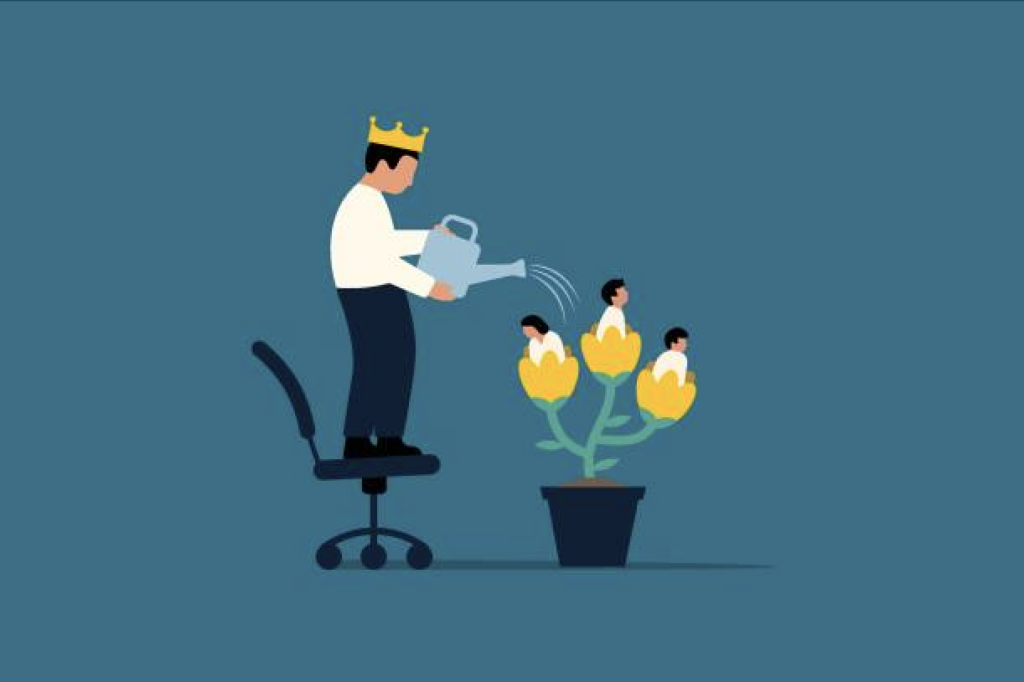
His recommendation was deceptively simple: every leader should have a short weekly check-in with each team member, ideally around fifteen minutes. The purpose is not status reporting in the usual sense. It is to ask how the person felt about last week, what they are focused on this week, and how the leader can help. Marcus described this as a frequent, light-touch form of attention that communicates care and creates a rhythm of support.
I love this because it is both deeply relational and operationally concrete. It makes love visible in leadership behavior. It also aligns with what so much leadership research has shown for years: people thrive when they feel noticed, supported, and connected to their manager in a way that is consistent rather than episodic.
There is also something important in the regularity of it. A loving culture is not built through occasional grand gestures. It is built through repeated attention.
Actionable Leadership Lessons From Marcus Buckingham
What I hope leaders take from this conversation is not simply the inspiration of a bold idea, but the discipline of applying it. Marcus’s argument becomes much more powerful once you translate it into daily leadership behavior.
A useful place to begin is by paying attention to the experiences you are already creating. If you are a leader, you do not need to wait for a culture initiative or a larger strategy document to design more love into the way people experience work. You can start by asking whether your team interactions are merely efficient or whether they are also affirming, trust-building, and human.
That might mean using a simple “love that / didn’t love that” question to notice which parts of the employee or customer experience are genuinely energizing and which ones feel thin or transactional. Marcus spoke about this “love that slider” as a way to bring more attention to where love is present and where neglect is creeping in.
It might also mean putting weekly check-ins on the calendar and protecting them as non-negotiable moments of attention. If a leader has too many direct reports to do that well, that is important information about the structure of the role, not evidence that the practice is unrealistic.
And it may mean rethinking how change, pressure, and difficult business decisions are communicated. One of the strongest undertones in this conversation was that leaders do not get to separate what they are doing from how they are doing it. The human impact of a decision is part of the decision.
Designing Love In, Not Waiting for It to Appear
What I appreciate most about Marcus’s perspective is that it is not passive. He is not asking leaders to feel more sentimental. He is asking them to become more intentional.
That is a much stronger invitation.
It asks leaders to consider whether the cultures they are building are animated by fear or by care. It asks them to notice whether they are creating “fine” experiences or genuinely energizing ones. It asks them to stop treating love as a private feeling and start treating it as something that can be embedded into the design of work itself.
For me, that is what made this conversation so rich. It named something many people instinctively know but have not had language for: that the best organizations do not just produce results. They create conditions where people can flourish while producing them.
And in a world where so much feels transactional, accelerated, and uncertain, that is not a small thing. It may be one of the most strategically important things a leader can do. Love is part of how people give their best.
That is what Marcus Buckingham reminded me of.
And I think it is a lesson leaders need now more than ever.