

Like many of the leaders and coaches I work with, I am paying close attention to the impact AI is having on work. I hear the questions constantly. Some people are energized by the possibilities. Others feel anxious, overwhelmed, or quietly afraid of being left behind. Most are carrying some version of both. They know something significant is shifting, but they are not always sure what to do with that knowledge.
Keith Ferrazzi is the founder of Ferrazzi Greenlight and the author of several bestselling books, including Never Eat Alone, Leading Without Authority, Competing in the New World of Work, and most recently Never Lead Alone. Over the last two decades, he has worked with Fortune 500 companies, startups, and government leaders on team performance, organizational transformation, and leadership. He also leads the Greenlight Research Institute and has been recognized by Thinkers50 and the Coaches50 Awards as one of the world’s leading thinkers and executive coaches. In other words, he has the strategic depth to talk about the future of work in a way that matters.
But what gave this conversation its depth was that Keith did not show up only as a thought leader. He also showed up as a father, a husband, and a human being trying to hold grief, uncertainty, self-care, and curiosity at the same time.
That combination of personal vulnerability alongside strategic clarity, is exactly what made this episode feel so aligned with What’s Possible. At its best, this show has always sat at the intersection of growth, leadership, and humanity. This conversation did all three.
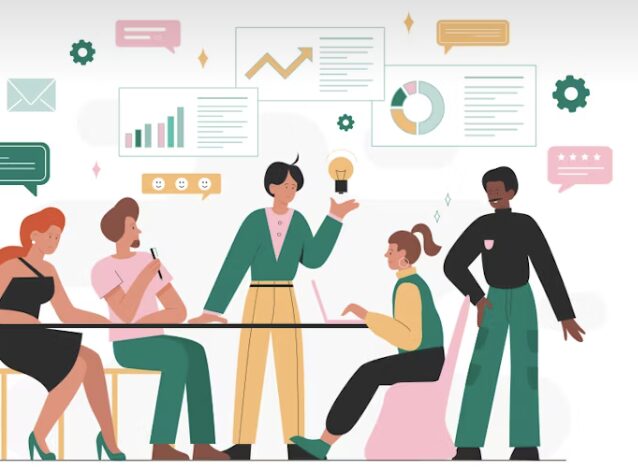
The Future of Leadership Is Teamship, Not Heroics
One of the clearest ideas in this conversation was also one of the most important: the future of leadership will not belong to heroic individuals. It will belong to high-performing teams.
Keith talks about this as a shift from leadership to teamship. I find that language helpful because it moves us away from an outdated model of leadership that still dominates many organizations. Even now, we often celebrate the standout performer, the visionary founder, the executive with all the answers, the person who can carry enormous pressure and still look polished doing it.
That model may have always been incomplete, but in a world shaped by AI, constant change, and growing complexity, it is becoming increasingly unsustainable. No single person can hold enough perspective, speed, knowledge, and adaptability to make that model work over time. The work now is too interconnected. The stakes are too distributed. The pace is too fast.
What matters more is whether a group of people can think together, challenge one another honestly, elevate one another, and stay accountable to something larger than any one person’s individual performance.
To me, this is a very practical leadership framework. When people are genuinely committed to a shared mission and to each other’s growth, teams move differently. They tell the truth faster. They surface blind spots sooner. They support one another more honestly. They create the kind of environment where innovation, resilience, and accountability can actually coexist.
That matters deeply right now, because many leaders are still being measured as individuals while being asked to solve increasingly collective problems.
How AI Is Reshaping Leadership and Team Collaboration
Keith’s perspective on AI is one of the reasons I was especially excited to have him on the show. I had already bookmarked the AI section of his work before we recorded because I knew it was one of the areas our listeners are wrestling with most. What I appreciated is that he does not approach AI with either blind optimism or performative fear. He treats it as a real force that is already reshaping how humans collaborate, how organizations are designed, and how careers will evolve.
One of the most striking ideas he offered is that many people are still thinking of AI as a tool when it is increasingly functioning more like a collaborator. He described a shift from seeing AI as a kind of intern to thinking about it as a room full of PhD-level associates sitting beside you. That image stayed with me because it captures both the promise and the disruption of this moment.
If that is true, leaders cannot simply add AI to existing structures and assume very little else needs to change. They will need to reconsider workflow, accountability, role design, communication, and perhaps most importantly, what they believe is uniquely human.
This is where the conversation moved beyond technology and into leadership in the deepest sense. The question is no longer just, “How do we use AI?” It becomes, “How do we redesign the way we work, lead, and collaborate in light of this reality?”

What Human Leaders Still Need to Do
One of the most common concerns I hear from leaders right now is some version of this question: If AI can do so much, where do humans fit now? Keith did not answer that with vague reassurance. He brought the conversation back to the things that still require human depth: trust, courage, discernment, accountability, and relationship.
That resonated with me because it aligns with so much of what we see in coaching. The questions leaders are facing now are not only technical. They are relational. How do I help a team stay grounded while work changes under their feet? How do I build trust in environments where roles are shifting and uncertainty is real? How do I preserve humanity while still embracing speed and innovation? These are not questions AI can answer for us. They are leadership questions.
This aligns with a great deal of research on team effectiveness. Amy Edmondson’s work on psychological safety has shown again and again that teams perform better when people feel able to speak candidly, raise concerns, ask questions, and admit mistakes without fear of humiliation. Keith’s language of co-elevation builds on that idea. It is not enough for people to feel safe; they also need to feel responsible for one another’s growth and the shared outcome. That is a much richer view of collaboration than the word often gets credit for.
Why Relationships Are Still the Infrastructure of Great Work
It was especially meaningful to hear Keith connect this conversation back to relationships. He introduced his new community, Beyond Connections, as a cohort-based experience designed to help people build the kind of meaningful, high-trust relationships that create both personal and professional impact.
I loved that connection to his earlier work because it reminded me that, in many ways, this has always been his deeper message: relationships are not a side strategy. They are infrastructure.
Relationships are how we get perspective and how we get challenged. They also keep us accountable and help us recover. They are how we build the kind of support system that makes ambition sustainable. That feels even more important in a world where AI may accelerate tasks, but cannot replace the lived experience of feeling seen, supported, and called higher by another human being.
This is one of the reasons I believe so strongly that the future of leadership is not less relational. It is more relational. The leaders who thrive will not only know how to use new tools. They will know how to create stronger rooms.
Actionable Leadership Lessons From Keith Ferrazzi
What I hope leaders take from this conversation is not just inspiration, but direction. Keith’s ideas are expansive, but they are also surprisingly practical when you slow them down and translate them into daily leadership.
A few actionable places to begin:
- Look at one meaningful goal you are pursuing and ask yourself who needs to be part of it. Keith’s phrase, “identify the team behind each dream,” is a useful leadership practice because it forces you to stop holding important work as an individual project.
- Make your social contracts more explicit. If you want co-elevation, people need more than shared enthusiasm. They need shared expectations around accountability, contribution, and growth.
- Treat AI as a reason to redesign work, not just speed it up. Ask what work truly needs human judgment, what can be delegated, and what kind of collaboration model your team now needs.
- Invest deliberately in relationships inside your team. Trust does not appear automatically because smart people are in the same room. It is built through consistent honesty, support, and challenge.
- Stay curious. Keith’s commitment to learning, even while carrying real pain in his personal life, was one of the most moving parts of the conversation. Curiosity helps leaders stay adaptive instead of defensive.
None of these actions are flashy. But they are meaningful. And in moments of real transition, meaningful often matters more than dramatic.
Staying Human in the Future of Work
What I appreciated most about this conversation is that it did not force a choice between innovation and humanity. It did not say: embrace AI and forget everything else. It did not say: cling to older ways of working and hope they survive. It did not say: optimize harder and call that progress. Instead, it offered something more grounded and more useful.
Stay curious. Stay relational. Stay willing to redesign. Stay willing to grow. And do not try to do any of it alone. That feels like the right message for this moment in leadership. Not because it makes the future less uncertain, but because it reminds us that uncertainty is more manageable when we are inside strong teams, strong relationships, and a strong commitment to elevating one another.
If the future of work is changing fast, then perhaps the most important question is not simply how we stay ahead. It is how we stay human while we do. That, to me, is what Keith Ferrazzi brought to this conversation. And that is what makes it so relevant to What’s Possible.