
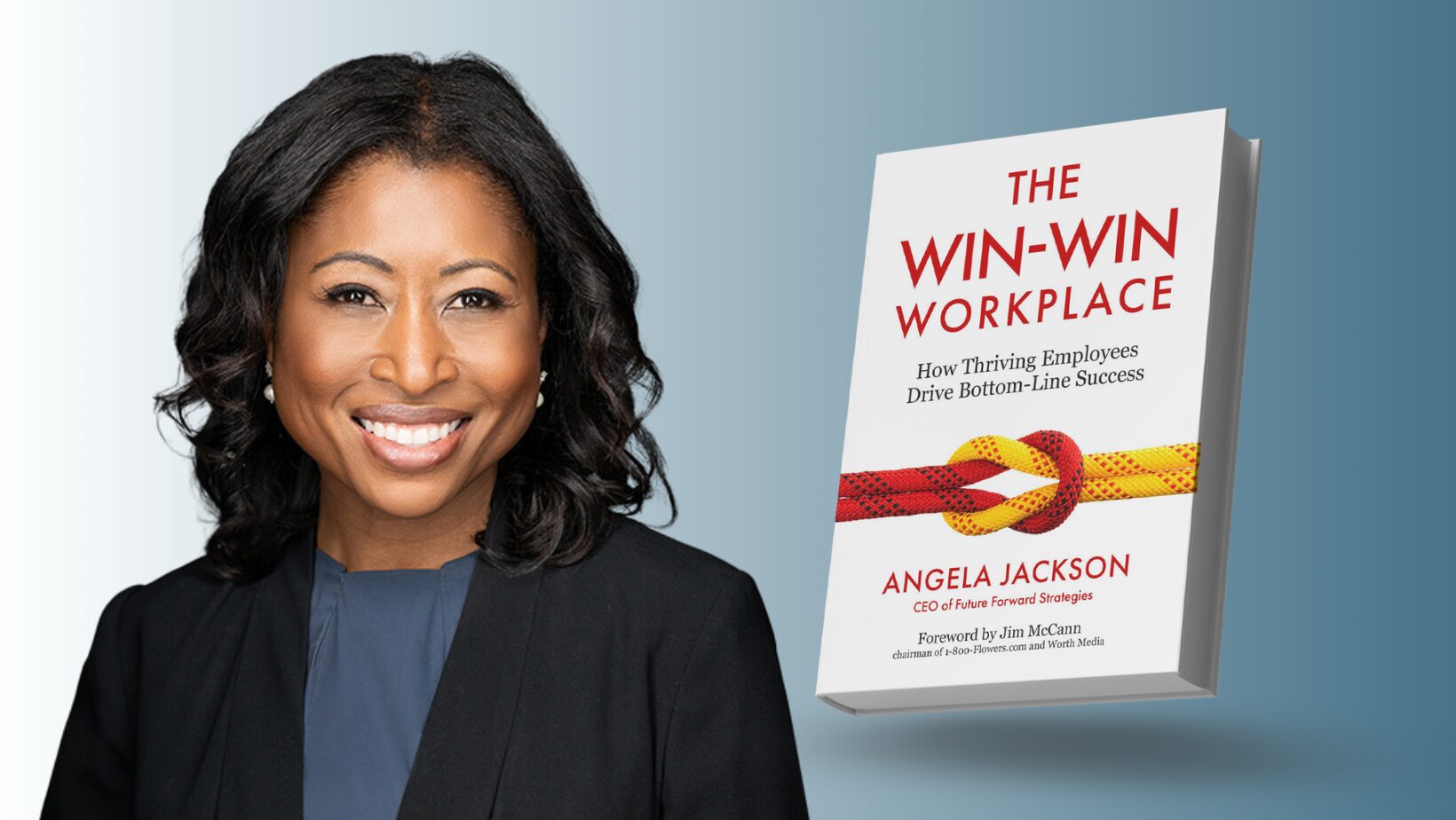
When I started What’s Possible, my goal was simple: to explore conversations that challenge the way we think about leadership, culture, and the future of work. Every guest brings a perspective that pushes us to reimagine what’s possible inside organizations, and my recent conversation with Dr. Angela Jackson did exactly that.
Angela is a workplace futurist, ESG expert, Harvard lecturer, and author whose research is shaking up the way leaders approach employee well-being. Her new book, The Win-Win Workplace: How Thriving Employees Drive Bottom-Line Success, is already earning awards and capturing attention from business leaders who know the old ways of working just aren’t sustainable anymore.
But beyond the accolades, Angela brings something deeply human to this conversation: her own lived experience. Early in her career, while thriving in high-intensity corporate roles at Viacom and Nokia, Angela’s life was turned upside down by a serious car accident. She returned to work expecting some adjustments, some recognition of what she’d been through. Instead, she walked back into the same workload and the same relentless pace. That disconnect forced her to ask hard questions: What are we really valuing at work? And at what cost?
Those questions became the foundation for her career-long exploration into well-being, not as a perk or a slogan, but as a core business strategy.

Why Well-Being Is a Business Imperative
When organizations talk about “well-being,” it often gets reduced to yoga classes, wellness apps, or extra vacation days. Those things can be nice, but they miss the bigger picture. Angela’s research makes the case that well-being isn’t about surface-level programs, it’s about how work is designed, measured, and led.
She put it simply during our conversation:
“If people are our most valuable resource, then measuring their well-being and designing workplaces that support it should be treated as seriously as tracking revenue or market share.”
That perspective is catching on. At the Win Win Workplace Summit in Chicago, Angela convened 300 employers to share how centering employee well-being directly impacts ROI. The stories were powerful: organizations reporting higher engagement, stronger retention, and even measurable increases in productivity once they made well-being a true priority.
This isn’t about choosing between people and profits. It’s about recognizing that the two are inseparable. Thriving employees drive thriving organizations.
Leadership Blind Spots
One of the most powerful threads in our conversation was around organizational blind spots.
So many leaders operate under outdated assumptions. They believe productivity equals longer hours. They assume engagement can be bought with paychecks alone. They cling to old norms even as the workforce, and the world, changes around them.
Angela called for what she terms a new social agreement at work. Employees today want more than a paycheck; they want to feel aligned with purpose, to have a voice in shaping their work, and to know their well-being isn’t an afterthought. Leaders who miss this shift risk not only losing their best people but also falling behind in innovation and competitiveness.
She reminded me of a simple but often overlooked truth: listening to employees isn’t enough. Leaders have to close the loop. When people share feedback, they want to see that it was heard, valued, and acted on. Otherwise, “listening sessions” become another empty box to check, and cynicism grows.
The Power of Personalization
Another theme Angela explored is the shift from one-size-fits-all approaches to personalized support.
Not every employee needs the same benefits. Some need flexibility for caregiving, others want accelerated career growth, and still others are focused on financial stability. Organizations that recognize and meet these different needs see stronger engagement and retention.
Angela gave the example of companies like Spotify, which invest deeply in tailoring benefits and employee experiences. These organizations are proving that personalization isn’t just possible, it’s a competitive advantage.
And personalization doesn’t stop at benefits. Angela envisions a future where AI-powered tools act like personalized career coaches, helping employees identify growth opportunities, connect with learning pathways, and receive targeted support for well-being. Far from replacing human leaders, these tools will give managers better insights into how to support their teams in meaningful ways.
The Role of Frontline Managers
One of Angela’s most practical insights is about the role of frontline managers.
We often talk about leadership in terms of CEOs or executives, but for most employees, the daily experience of work is shaped by their manager. A supportive manager can make an employee feel seen, valued, and motivated. A disengaged one can undo even the most well-intentioned corporate initiatives.
Angela argued that training and equipping frontline managers is one of the most high-leverage moves an organization can make. They are the bridge between strategy and lived experience. And when they’re empowered to support well-being, the ripple effects are enormous.

Actionable Steps for Leaders
Angela offered plenty of inspiration, but she also grounded our conversation in action. For leaders ready to build their own “win-win workplace,” here are some starting points:
- Measure What Matters: Treat employee well-being like any other key performance indicator. Use surveys, pulse checks, and data to understand how people are doing, and then act on the results.
- Invest in Frontline Managers: Equip managers with the training, tools, and time to prioritize well-being. They are the everyday touchpoints who shape culture more than any CEO memo ever could.
- Personalize the Employee Experience: Move beyond generic benefits and consider the diverse needs of your workforce. Tailored flexibility, support, and growth opportunities create stronger loyalty and performance.
- Close the Loop on Employee Feedback: Don’t just listen, respond. Show employees how their input is shaping change. This builds trust and signals that their voices matter.
- Embrace Technology Thoughtfully: Leverage AI and digital tools to enhance, not replace, human leadership. Used well, technology can help personalize support and free leaders to focus on deeper, more human connections.
My Win Win
As I listened to Angela, I found myself reflecting on how often organizations treat well-being as separate from the “real work.” But as she so powerfully demonstrated, well-being is the real work. It’s not a side initiative or a perk to layer on top of endless demands. It’s the foundation that makes everything else possible.
When employees feel supported, they bring their best selves to their work. They innovate more, collaborate more, and stay longer. And when they don’t? No amount of strategy or technology can fill the gap.
Angela’s perspective left me both inspired and challenged. Inspired, because she shows that building win-win workplaces is not only possible but already happening. Challenged, because it asks leaders, myself included, to take a hard look at where we might be overlooking or undervaluing well-being in our own spheres of influence.
The future of work will be defined by how courageously leaders embrace the well-being of their people. That’s the message Dr. Angela Jackson brings, and it’s one I believe we all need to hear.
I encourage you to listen to our full conversation on What’s Possible. Angela’s insights are practical, actionable, and rooted in both research and real-world experience. More than that, they remind us of the bigger picture: when we build workplaces where people thrive, organizations don’t just do better, they become forces for good in the world.
That’s the true definition of a win-win.