
Episode 123

I’ve been talking about meetings a lot lately. I’ve even caught myself talking about meetings in meetings, which feels a little too on-the-nose to ignore. The frustration people feel about meetings is rarely about time, it’s about the quiet, creeping sense that the way we spend our days no longer reflects what actually matters.
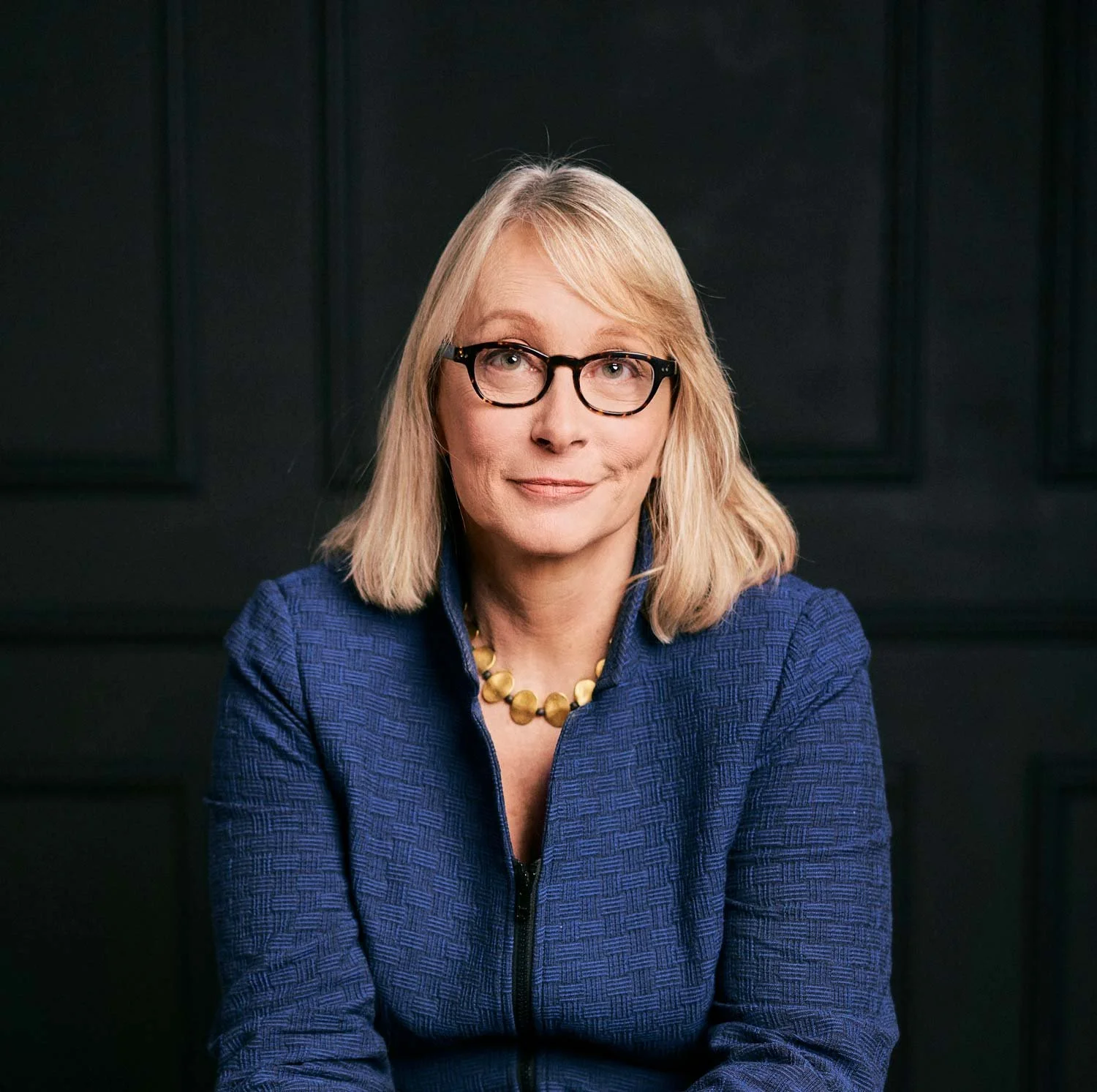
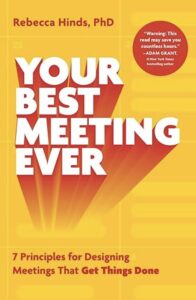
That’s why my conversation with Dr. Rebecca Hinds landed so deeply. Not because she wrote a book about meetings, but because she reframes meetings as something most organizations have never really designed at all. Meetings, she argues, are one of the most important products inside an organization. And yet, unlike the products we ship to customers, we rarely ask whether they’re useful, humane, or even necessary.
When Meetings Become the Default Instead of the Design
Somewhere along the way, meetings became the automatic response to complexity. A decision needs to be made? Schedule a meeting. Misalignment? Add another meeting. Uncertainty? Invite more people and hope clarity magically appears. What often goes unquestioned is whether a meeting is the right intervention at all.
Meetings become the container for everything we haven’t resolved elsewhere: unclear roles, fuzzy ownership, unspoken power dynamics, and a reluctance to say no. Over time, the calendar fills inherited habits, rather than intentional conversations. And the cost isn’t just hours. It’s the ability to do deep, meaningful work without fragmentation.
Meetings as a Product
One of the most powerful ideas Rebecca introduces is deceptively simple: meetings are a product. Why? Products are designed. They have a purpose. They solve a specific problem for a specific user. When they don’t work, we iterate, or we sunset them. Most meetings don’t meet any of those criteria.
They persist long after their usefulness has expired. They’re scheduled without a clear customer in mind. They’re optimized for convenience rather than impact. And unlike external products, there’s rarely feedback when they fail, just quiet disengagement, multitasking, or burnout.
We talk a lot about leadership as addition: new initiatives, new strategies, new frameworks, new tools. But subtraction (removing what no longer serves) is often far more difficult. Canceling a meeting can feel risky. There’s a fear of missing something, of signaling disengagement, of appearing unresponsive. Yet many of the leaders I admire most are those who are willing to ask: What if we stopped doing this?
Rebecca’s research highlights something I see constantly in coaching: leaders underestimate the permission they give simply by modeling subtraction. When a leader cancels a standing meeting and explains why, it doesn’t create chaos, it creates clarity. It tells the organization that time is valuable, focus matters, and presence isn’t measured by calendar density.
Subtraction isn’t about doing less for the sake of minimalism. It’s about creating space for what actually moves the work forward.
Hybrid Meetings and the Gravity of Power
If meetings are already hard, hybrid meetings can feel nearly impossible. The power dynamics are subtle but real. The room has gravity and even side conversations happen off-camera. Eye contact favors those physically present, and even when intentions are good, remote participants often feel like observers rather than contributors.
What I appreciated about Rebecca’s approach is that she doesn’t treat hybrid as a technical problem, but a human one. Inclusion requires intentional design choices that redistribute attention and voice. There are a few small choices that determine whether hybrid meetings reinforce hierarchy or expand participation. And this is where meetings quietly shape culture through lived experience. People learn whether their presence matters by whether their voice is heard.
If there’s one meeting I will defend without hesitation, it’s the one-on-one. Not as a status update or a performance review in disguise. But as a space where trust is built slowly, conversation by conversation. Too often, one-on-ones default to the manager’s agenda with updates and problems highlighted.
But when the one-on-one becomes a space owned by the direct report, their priorities, concerns, and thinking drive the conversation becomes possible. These meetings don’t need to be long. They need to be intentional.
The Real Cost of “Just One More Meeting”
When leaders tell me they’re overwhelmed, the issue is rarely volume alone. It’s fragmentation. Meetings interrupt focus because they break momentum. They leave behind cognitive residue: the unfinished thoughts that linger long after the calendar notification ends.
Over time, this fragmentation erodes confidence. People stop trusting their ability to do meaningful work. Creativity becomes squeezed into the margins. Energy is spent managing time rather than using it. This is why rethinking meetings isn’t a productivity hack, it’s a well-being intervention.

What Leaders Can Do Differently
You don’t need organizational permission to begin changing how meetings function around you. Culture shifts often start locally, through small, visible experiments. Here are a few places to begin:
Actionable steps for leaders
- Audit recurring meetings and ask which ones still serve a clear purpose, and which persist by inertia
- Shorten meeting length and observe what changes in focus and energy
- Clarify the “product” of each meeting before it happens: decision, alignment, creativity, or connection
- Redistribute voice in hybrid meetings by intentionally inviting remote participants first
- Treat one-on-ones as a space for the other person’s thinking, not just your agenda
- Experiment with subtraction: cancel one meeting and replace it with clarity
Notice that none of these require new tools. They require attention.
Meetings as a Mirror
Meetings reflect how an organization thinks about time, trust, and power. They show us what we prioritize and what we tolerate. When meetings are designed with intention, they can be spaces of clarity, connection, and progress. When they’re not, they quietly drain the very energy organizations claim to value.
Rebecca’s work is a reminder that better meetings aren’t about control. They’re about care. Care for people’s time. Care for attention. Care for the conditions that allow meaningful work to happen. And perhaps the most hopeful insight of all: we don’t need to wait for permission to start designing differently.
Sometimes, what’s possible begins with a simple question: Does this meeting deserve to exist? If the answer is no, that might be the most productive decision you make all week.
If you’d like to continue this conversation, listen to the full episode with Rebecca Hinds on What’s Possible, and explore how intentional design (of meetings and beyond) can change the way work feels.
Let’s find out what’s possible when the way we meet finally matches the way we want to work.